
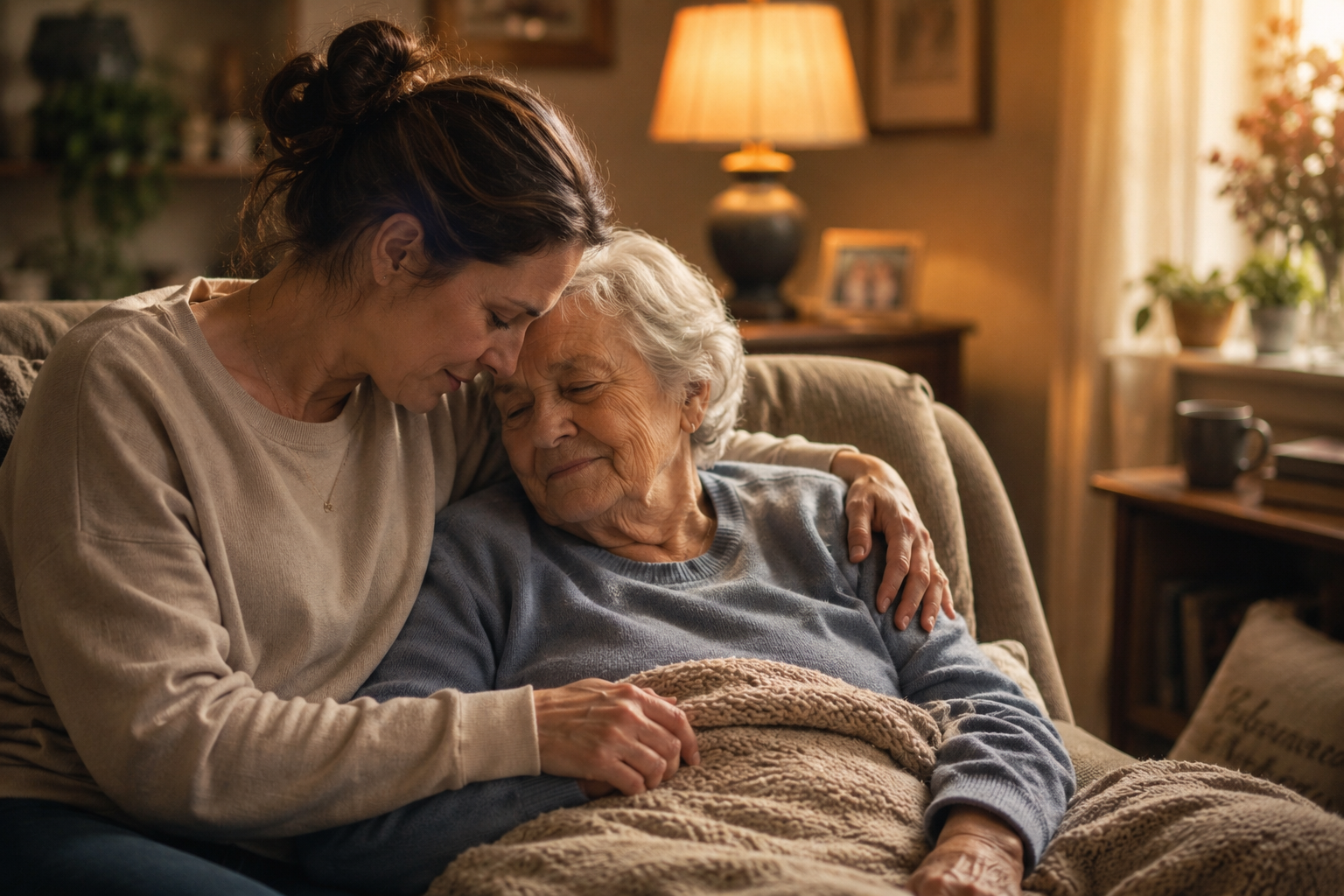
How the Words We Speak to Ourselves Shape the Caregiving Journey
Caregiving changes a person.
Not only through the physical tasks, the appointments, the medications, or the long nights—but through the quiet conversations happening internally while carrying the weight of caring for someone you love.
As an End-of-Life Doula and Elder Care Doula, I often witness caregivers offering extraordinary compassion to everyone around them while speaking to themselves with criticism, guilt, exhaustion, and impossible expectations.
“I should be handling this better.”
“I’m so stupid for forgetting that.”
“I shouldn’t need help.”
“Why am I so overwhelmed?”
These words may seem small in the moment, spoken quietly under the breath or buried deep in the mind, but over time they matter. The language we use with ourselves shapes how we experience caregiving, how worthy we believe we are of support, and whether we allow ourselves to receive care, too.
Caregivers are often fluent in compassion for others, yet speak to themselves in a language of depletion.
The Emotional Weight Caregivers Carry
Caregiving is deeply emotional work.
It can hold love, tenderness, meaning, and profound connection, but also exhaustion, grief, fear, resentment, uncertainty, loneliness, and anticipatory loss. Many caregivers quietly carry these emotions while trying to remain strong for everyone else.
And because caregiving often unfolds gradually, self-neglect can become normalized.
Rest begins to feel selfish.
Asking for help can feel like failure.
Personal needs are placed at the bottom of the list.
Over time, harsh self-talk can quietly reinforce the belief that suffering is simply part of what a “good caregiver” should endure.
But caregiving was never meant to be carried alone.
The Spiritual and Emotional Impact of Self -Talk
The words we repeat internally become more than thoughts, they become beliefs.
When caregivers continually criticize themselves, minimize their needs, or deny themselves compassion, it can slowly erode their sense of worth and emotional resilience. The nervous system remains in a prolonged state of stress, making burnout, anxiety, emotional exhaustion, and isolation more likely.
This is not about “thinking positively” or pretending caregiving is easy.
It is about gentleness.
It is about dignity.
It is about learning to speak to yourself in ways that honor your humanity while you care for another.
Sometimes the smallest shift in language can create space to breathe again.
Instead of:
“I’m failing.”
What if we gently translated it to:
“This is incredibly hard, and I’m doing the best I can.”
Instead of:
“I should be able to do this alone.”
What if it became:
“No one is meant to carry this alone.”
These shifts do not erase the challenges of caregiving—but they soften the sharp edges created by self-judgment.
How a Doula Can Support the Caregiver
One of the most overlooked aspects of caregiving is that caregivers themselves need support, too.
As a doula, my role is not only to support the individual facing serious illness, aging, or end-of-life, it is also to hold space for the emotional and spiritual well-being of those walking beside them.
This support may include:
- Creating a calm space where caregivers can speak honestly without judgment
- Helping caregivers process anticipatory grief and emotional overwhelm
- Offering grounding techniques, guided imagery, or moments of quiet reflection
- Encouraging healthier boundaries and permission to receive support
- Helping caregivers reconnect with themselves beyond the caregiving role
- Sitting with difficult emotions that others may try to fix or avoid
- Providing compassionate presence during tender and uncertain moments
Sometimes what caregivers need most is not another task list or piece of advice.
Sometimes they simply need someone to remind them:
You are still a person inside of this caregiving journey.
Your needs matter, too.
A Gentle Invitation
If you are caring for someone you love, I invite you to notice the language you use with yourself this week.
Not with criticism.
Not with shame.
Simply with awareness.
Ask yourself gently:
Would I speak this way to someone I love?
If the answer is no, perhaps it is time to begin choosing softer words. Kinder translations. More compassionate truths.
Because caregiving asks much of the heart.
And gentleness is not weakness – it is sustainability.
Leave a Reply