
There are moments in life that stop us in our tracks.
A serious diagnosis.
A quiet conversation in a doctor’s office.
A phone call that changes the direction of a family’s future.
Even when treatment options remain available and life continues moving forward in many ways, something shifts internally. Suddenly, conversations that once felt far away begin pressing gently and sometimes urgently, against the hearts of those involved.
What do we say?
How do we say it?
And perhaps most difficult of all… how do we begin?
When someone we love is facing a serious illness that may eventually lead to death, families often find themselves standing at the edge of conversations they never imagined having. These discussions are rarely easy. They carry emotion, fear, uncertainty, grief, and love all intertwined together.
Some conversations are simply innately hard.
They ask us to look directly at mortality.
They ask us to acknowledge the possibility of loss.
They ask us to speak words that feel heavy before they are even spoken aloud.
And so, many families delay them.
Not because they do not care.
Not because they are avoiding love.
But because they love deeply.
One of the most common concerns I hear from families is:
“I don’t want to upset them.”
Or,
“I’m afraid talking about it will take away hope.”
Protecting the people we love from pain feels instinctive. Yet silence often creates its own kind of suffering. Unspoken fears can grow larger in the quiet. Questions remain unanswered. Wishes go unexplored. Opportunities for connection may slip quietly by while everyone waits for the “right time.”
The truth is, these conversations do not need to happen perfectly.
They simply need a gentle place to begin.
As an End-of-Life Doula, I often sit beside individuals and families as they navigate these emotional pathways together. My role is not to force conversations or push families toward decisions before they are ready. Instead, I help create a calm and supportive space where people can begin finding words for what lives in their hearts.
Sometimes that begins with rehearsing the conversation beforehand.
Family members often tell me:
“I don’t even know how to say this out loud.”
So we practice.
We sit together and gently explore the words.
We pause when emotions rise.
We make room for tears, uncertainty, and fear.
Often, simply speaking the words aloud for the first time softens some of their power.
Doulas can also help hold space during family discussions themselves. Having a steady, nonjudgmental presence in the room often helps family members feel safer sharing concerns, asking questions, or expressing emotions they may otherwise keep hidden.
These conversations are not about giving up.
They are about understanding.
Connection.
Preparation.
And making sure the person at the center of care feels heard, supported, and honored.
When conversations begin earlier after a terminal diagnosis, families often discover that the road ahead becomes gentler to navigate. Communication becomes less frightening over time. Trust deepens. Loved ones gain greater clarity about wishes, fears, values, and priorities.
The conversations themselves may still be emotional – because love is emotional. But they often become less overwhelming when they are approached gradually and with support.
No family does this perfectly.
There may be pauses.
Tears.
Moments of disagreement.
Periods of silence.
All of that is part of being human.
What matters most is creating opportunities for honesty, connection, and presence while there is still time to share them.
Sometimes the bravest thing we can do is simply begin.
Gentle Reflection Questions for Families
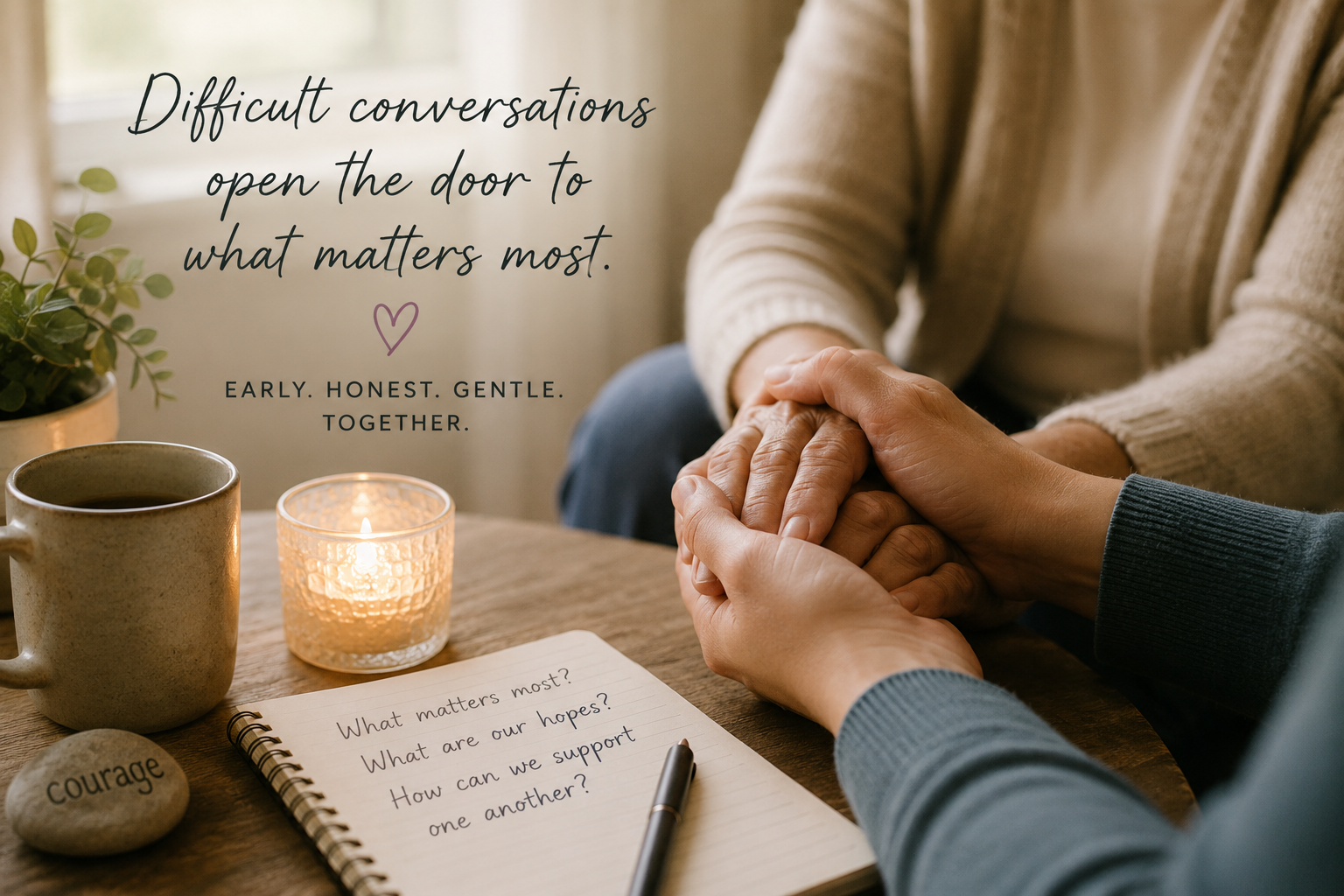
If your family is struggling to begin these conversations, consider starting softly:
- What feels most important to you right now?
- What are you hoping for in the months ahead?
- What is keeping you up at night?
- How can we best support one another?
- Are there things you want your family to understand or know?
- What brings you comfort and peace?
These are not one-time conversations.
They are ongoing moments of connection that unfold over time.
And no one has to navigate them alone.
If you or your family are facing difficult conversations after a serious or terminal diagnosis, Pinnacle Doula Services offers compassionate, non-medical support to help individuals and families navigate these tender moments with greater clarity, communication, and connection.
Sometimes having a calm presence beside you can make it easier to begin the conversations that matter most.
Leave a Reply